
Choosing shingles involves more than selecting a color from a sample board. The product must be appropriate for the roof design, installed as part of a complete system, and supported by flashing, ventilation, underlayment, starter shingles, ridge caps, and qualified workmanship.
Central Ohio homes experience high winds, hail, heavy rain, snow, summer heat, and freeze-thaw cycles. No asphalt shingle is damage-proof, but homeowners can compare performance ratings, material construction, warranty terms, appearance, availability, and installation requirements before making a decision.
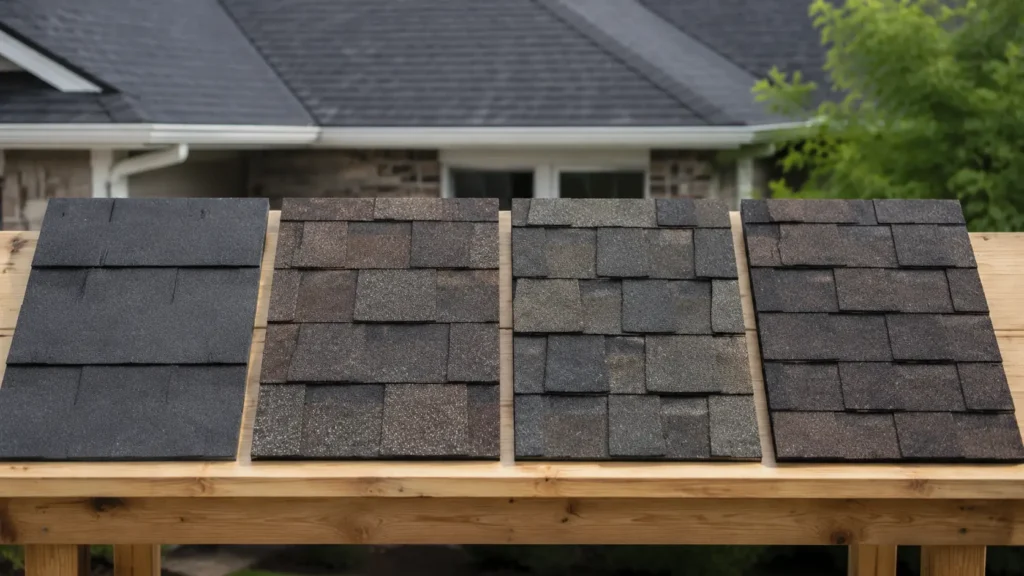
Common Asphalt Shingle Categories
Three-Tab Shingles
Three-tab shingles have a flat, uniform appearance and are generally positioned as a basic roofing option. They may have fewer color and dimensional choices than architectural products. When comparing a three-tab proposal, review the exact product, wind rating, warranty, complete accessory system, and installation scope.
Architectural Shingles
Architectural, laminated, or dimensional shingles use multiple layers or a dimensional design to create a heavier appearance. They are common on replacement projects because they offer a broad range of colors, profiles, and performance levels. Products within this category still vary considerably.
Designer and Luxury Shingles
Designer shingles may imitate the depth of slate, shake, or other specialty materials. They can be heavier, more detailed, and more expensive. The roof structure, slope, flashing plan, manufacturer requirements, and architectural style should be considered before choosing a premium profile.
Impact-Resistant Shingles
Some shingles are tested and classified for impact resistance. A higher classification can be useful in hail-prone areas, but it does not guarantee that the roof will never be damaged. Hail size, wind, roof age, temperature, slope, and the type of impact all affect the outcome. Homeowners should verify the exact product and ask their insurer whether any policy consideration applies.
Performance Features to Compare
Wind Rating and Installation Requirements
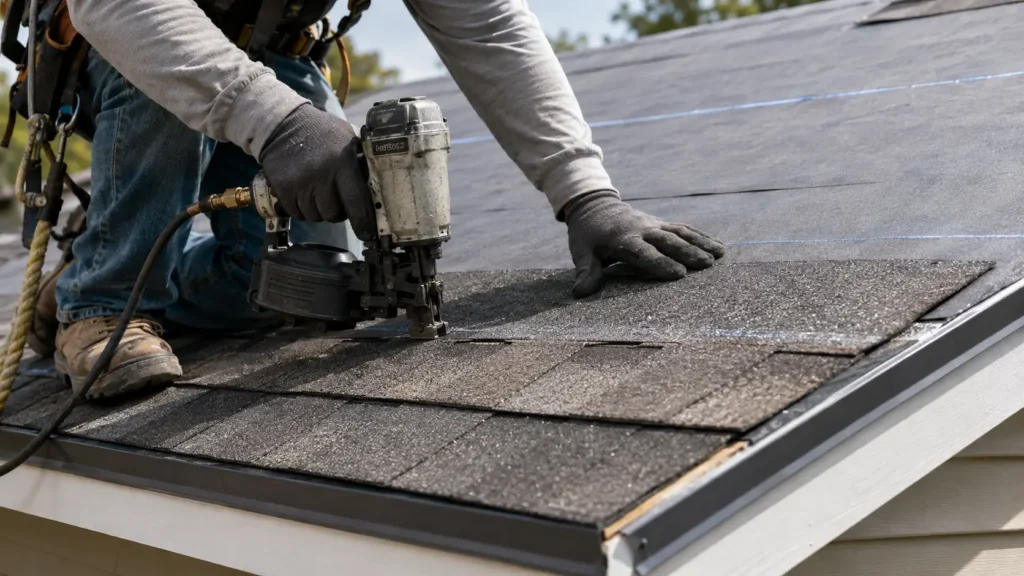
Wind performance depends on both the product and the installation. The correct number and placement of nails, starter course, seal strips, roof slope, deck condition, and local exposure all matter. A stated wind rating assumes the product is installed according to the manufacturer’s written instructions.
Algae Resistance
Dark streaks on a roof are often associated with algae growth rather than an active leak. Many products include algae-resistant granules or warranty provisions. Shaded roofs and areas with nearby trees may be more prone to staining. Review what the manufacturer actually covers and for how long.
Warranty Structure
Shingle warranties may include different periods, proration, transfer rules, wind limitations, algae terms, and installation requirements. Workmanship coverage is separate from a material warranty. Ask who provides each warranty, what registration is required, which accessories must be used, and what events are excluded.
Availability and Repairability
A product that is widely available may be easier to match for future repairs, although sunlight and weather can change color over time. Specialty colors and profiles may have longer lead times. Availability should be confirmed before the old roof is removed.
Color and Appearance
Roof color affects the overall appearance of the home because the roof can represent a large part of the visible exterior. Consider permanent materials such as brick, stone, and masonry first, followed by siding, trim, gutters, shutters, and doors. A physical sample should be viewed outdoors in different lighting whenever possible.
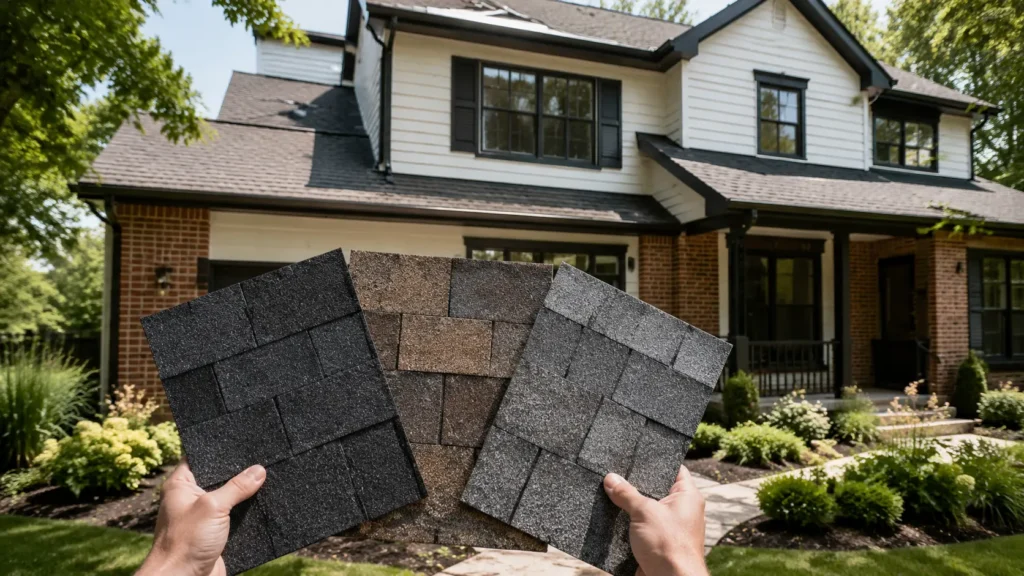
Very dark shingles can create strong contrast on light siding, while blended colors may connect several exterior materials. Neighborhood or homeowners-association requirements should be checked before ordering. Online visualizers are useful planning tools, but screens do not reproduce color and scale perfectly.
The Complete Roof System Matters
A roof is not only the field shingles. A well-planned replacement may include:
- Roof decking repairs where needed.
- Underlayment and eave protection appropriate for the assembly.
- Starter shingles along eaves and rakes.
- Drip edge and correctly integrated gutters.
- Valley, chimney, wall, and penetration flashing.
- Compatible ridge-cap shingles.
- Intake and exhaust ventilation suited to the attic design.
- Manufacturer-approved fasteners and accessories.
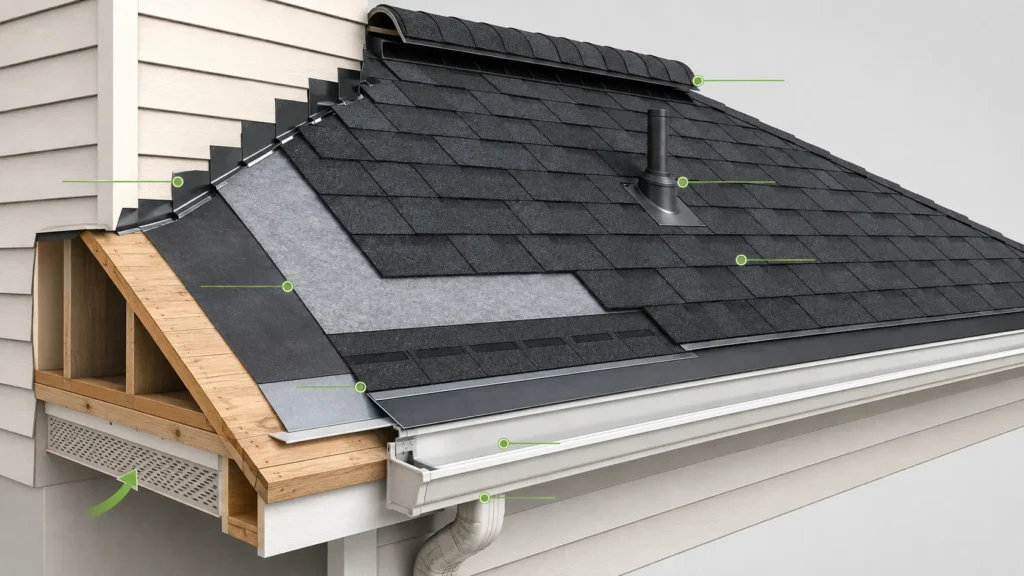
A premium shingle installed over damaged decking or with incomplete flashing will not perform like a complete, properly installed system. Compare proposals by scope, not by product name alone.
Questions to Ask Before Selecting a Shingle
- What is the exact manufacturer, product line, and color?
- What wind and impact classifications apply to this product?
- Which underlayment, starter, ridge, and ventilation products are included?
- How will valleys, chimneys, walls, and penetrations be flashed?
- What material and workmanship warranties are provided?
- Are registration or accessory requirements needed for enhanced coverage?
- Is the product currently available, and what happens if additional material is needed?
- Can I view full-size samples or completed homes with this color?
Choosing for Your Home, Not an Average Home
The best roofing shingle for one Central Ohio home may not be the best option for another. Budget, roof slope, architecture, surrounding trees, wind exposure, desired appearance, warranty priorities, and expected ownership period can all change the recommendation.
A contractor should explain practical differences without claiming that one product is indestructible. The final proposal should identify the exact materials and installation details so the homeowner knows what is being purchased.
Frequently Asked Questions
Are architectural shingles better than three-tab shingles?
Architectural shingles often offer more dimensional appearance and a wider range of product options, but the exact specifications, installation, and complete system should be compared. Category alone does not guarantee performance.
Are impact-resistant shingles hail-proof?
No. Impact-resistant products are tested to particular standards, but severe weather can still cause damage. Product class, age, installation, hail size, and storm conditions all matter.
Does roof color affect attic temperature?
Color can influence solar heat absorption, but ventilation, insulation, air sealing, roof assembly, shade, and product reflectance also matter. Do not choose color based on one factor alone.
Can I install a different shingle brand over my existing roof?
Compatibility, local requirements, deck condition, number of existing layers, and manufacturer instructions must be considered. Many replacement projects involve removing the old materials so the deck can be evaluated.
Should gutters match the roof color?
They can match the roof, trim, fascia, or siding depending on the desired appearance. Performance, gutter size, downspout placement, and roof-edge integration remain more important than color alone.