

A roof leak can begin with a missing shingle, damaged flashing, a failed seal, clogged drainage, or another opening in the exterior system. The stain inside the home may be the first visible clue, but it does not always appear directly beneath the entry point.
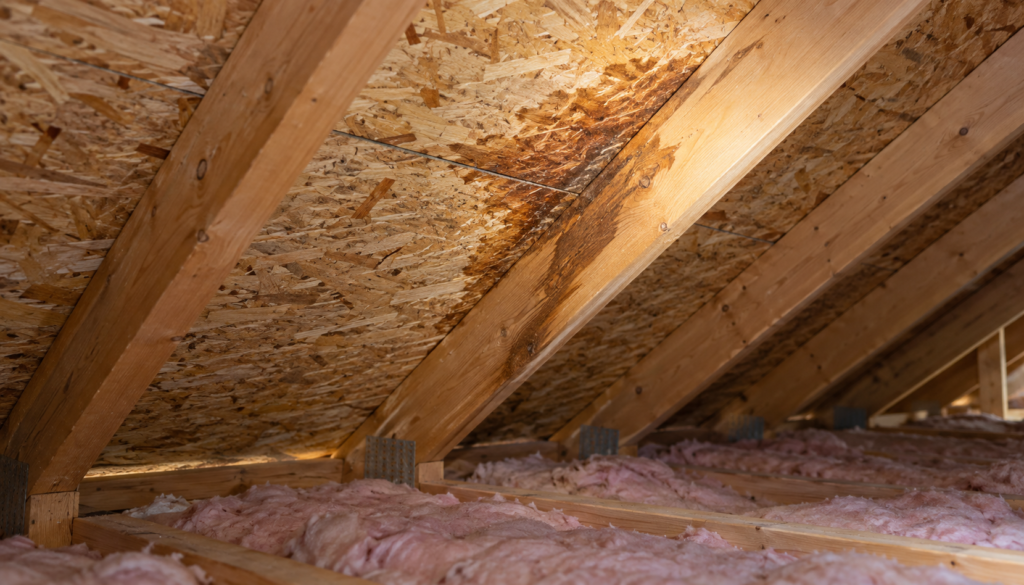
Water can travel along roof decking, rafters, fasteners, pipes, insulation, and ceiling materials before it becomes visible. That is why successful roof-leak repair begins with finding the actual source instead of simply coating the area above the stain.
Why Roof Leaks Can Be Difficult to Locate
A sloped roof is made of overlapping materials designed to shed water. When water gets beneath the surface, gravity and the shape of the framing can carry it away from the original opening. Wind-driven rain can also move sideways or upward beneath loose components. An intermittent leak may only appear when rain comes from a particular direction or when snow begins to melt.
Interior moisture is not always a roof leak. Plumbing, bathroom exhaust, HVAC condensation, attic humidity, and ice dams can create similar stains. A complete evaluation may need to consider the roof, attic, exterior walls, and mechanical systems.
Common Roof Leak Locations
Damaged or Missing Shingles
High winds, falling debris, foot traffic, age, or improper fastening can loosen or break shingles. One missing shingle does not always create an immediate interior leak because underlayment may provide temporary protection, but the exposed area should be evaluated before more materials lift or water reaches the decking.
Chimney Flashing
Chimneys interrupt the roof surface and require several coordinated flashing components. Step flashing should work with the shingles along the sides, while counterflashing helps cover the upper edges. The uphill side may require a cricket or other drainage detail on wider chimneys. Cracked mortar, separated sealant, corroded metal, or missing pieces can allow water into the roof-to-chimney connection.
Pipe Boots and Plumbing Vents
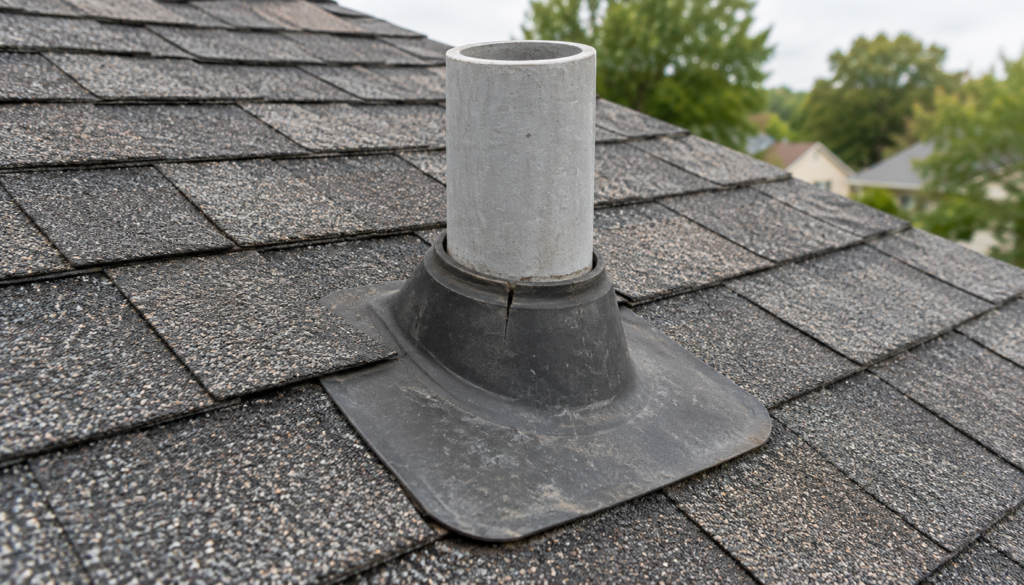
Plumbing pipes commonly pass through flexible or metal flashing boots. Sunlight, temperature changes, and age can crack rubber collars or loosen seals. Water may then follow the pipe into the attic and appear on a ceiling or wall below.
Roof Valleys
Valleys carry runoff from two roof slopes, so they handle more water than many other areas. Problems may develop when shingles are cut incorrectly, valley flashing is damaged, debris blocks the path, or fasteners are placed in vulnerable locations. Repairs must preserve a clear and durable water channel.
Wall and Dormer Connections
Where a roof meets a vertical wall, step flashing and siding details must work together. Missing kick-out flashing near the bottom of a wall can direct water behind siding or into the structure. Caulk alone is not a substitute for properly layered flashing.
Skylights
A skylight leak may come from damaged flashing, blocked drainage channels, failed seals, condensation, or the surrounding roofing system. Repeatedly applying sealant around the frame may hide the symptom without correcting the flashing or moisture source.
Roof Vents and Exhaust Penetrations
Box vents, powered fans, kitchen exhausts, and other penetrations require compatible flashing and secure fastening. Cracked housings, exposed fasteners, loose flanges, or poor shingle integration can create openings.
Gutters, Drip Edge, and Fascia
Clogged or poorly pitched gutters can overflow and keep the roof edge wet. A gutter mounted too high may interfere with the shingle edge, while missing or misaligned drip edge can allow water behind the gutter. Rotted fascia may indicate a long-standing drainage or roof-edge problem.
Ice Dams
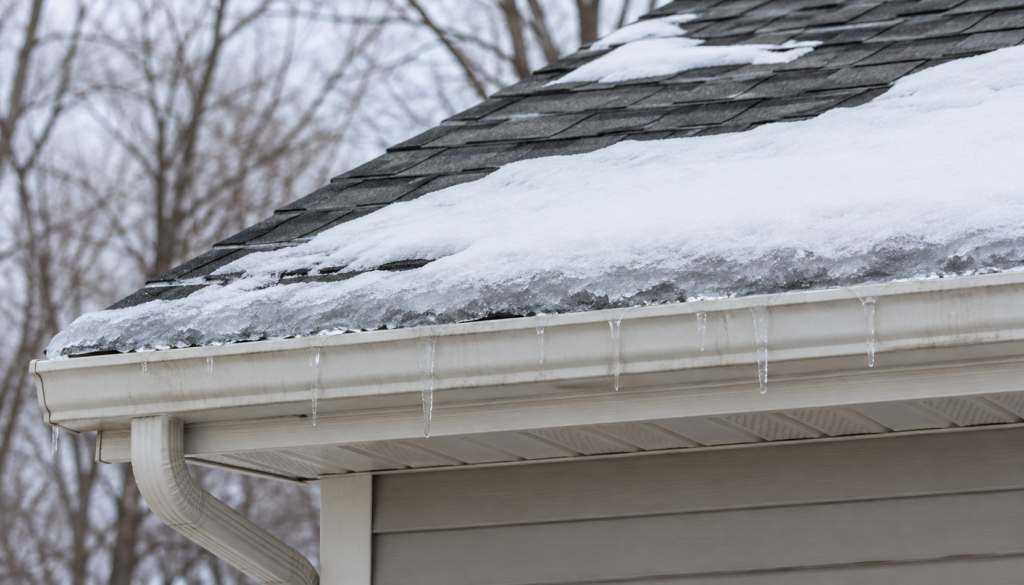
During winter, heat escaping through the attic can melt snow on the upper roof. Water can refreeze near colder eaves and create a ridge of ice. Additional meltwater may back up beneath shingles. Ice-dam leaks require more than removing visible ice; insulation, air leakage, ventilation, and eave protection may all need evaluation.
What to Do When You Notice a Leak
1. Protect the interior by moving valuables and safely collecting dripping water.
2. Photograph stains, dripping areas, and visible exterior changes from a safe location.
3. Note the date, weather conditions, and whether the leak appears during every storm.
4. Avoid climbing onto a wet, icy, steep, or damaged roof.
5. Schedule an inspection to trace the source and determine the repair scope.
If water is near electrical fixtures, the ceiling is bulging, or structural damage is suspected, keep people away from the area and seek appropriate emergency assistance. A saturated ceiling can release water or material unexpectedly.
Why Temporary Sealants Often Fail
Roof cement, spray coatings, and general-purpose caulk may provide limited emergency protection in some situations, but they are not universal repairs. Products can trap moisture, interfere with drainage, damage compatible materials, or make later repair more difficult. The correct solution depends on how the roof component was designed to shed water.
A durable repair typically removes or lifts enough surrounding material to restore proper layering. The contractor may replace damaged shingles, flashing, underlayment, decking, or penetration components rather than sealing only the visible gap.
Repair or Replacement?
An isolated leak on a younger roof may be repairable when compatible materials are available and the surrounding system remains healthy. Replacement may be more practical when leaks recur in several locations, shingles are brittle or deteriorated, decking damage is widespread, or repairs would only provide a short-term solution.
The written recommendation should explain the likely source, visible damage, proposed materials, affected area, and what is not included. Clear documentation helps homeowners compare solutions instead of comparing price alone.
Frequently Asked Questions
Can a roof leak stop on its own?
The dripping may stop when the weather changes, but the opening or moisture source usually remains. Water may also be collecting where it is not yet visible. An intermittent leak should still be evaluated.
Does a ceiling stain show where the roof is leaking?
Not always. Water can travel along decking, framing, pipes, and insulation before reaching the ceiling. The visible stain is a starting point, not necessarily the entry point.
Can clogged gutters cause roof leaks?
They can contribute to roof-edge and fascia moisture when water overflows or backs up. The roof edge, drip edge, gutter position, fascia, and downspout flow should be reviewed together.
Will insurance cover a roof leak?
Coverage depends on the policy and cause of damage. Sudden damage from a covered event may be treated differently from age, wear, maintenance issues, or long-term leakage. The insurer makes the coverage decision.
How quickly should a roof leak be inspected?
Prompt evaluation is recommended because water can damage decking, insulation, drywall, paint, flooring, and personal property. Active or severe water entry may require emergency mitigation.