
Most homeowners know that a roof will not last forever, but the installation date alone does not reveal exactly when replacement will be necessary. Two roofs of the same age can be in very different condition because of material quality, installation, ventilation, weather exposure, maintenance, and the shape of the home.
For many Central Ohio homes, an asphalt-shingle roof may provide roughly 20 to 30 years of service. That range is only a planning estimate. Some systems need major work earlier, while a well-installed and well-maintained roof may remain functional longer. The safest decision comes from evaluating the roof that is actually on the home rather than relying on a calendar alone.
Typical Lifespans for Common Residential Roofing Materials
Material type establishes a general starting point, but product quality and installation standards matter within every category. Architectural asphalt shingles are the most common choice in many Columbus-area neighborhoods because they balance cost, appearance, and performance. Basic shingles may have a shorter practical life, while premium architectural or designer products may be built for longer service when installed as part of a complete system.
Metal, slate, synthetic, cedar, and other specialty roof systems may have different expected service lives. Those systems also require specialized flashing, fastening, ventilation, and maintenance. A long manufacturer warranty should not be interpreted as a promise that every installation will perform for the full warranty period. Warranty coverage, expected product life, and the roof’s actual condition are separate considerations.
What Determines How Long a Roof Lasts?
Installation Quality
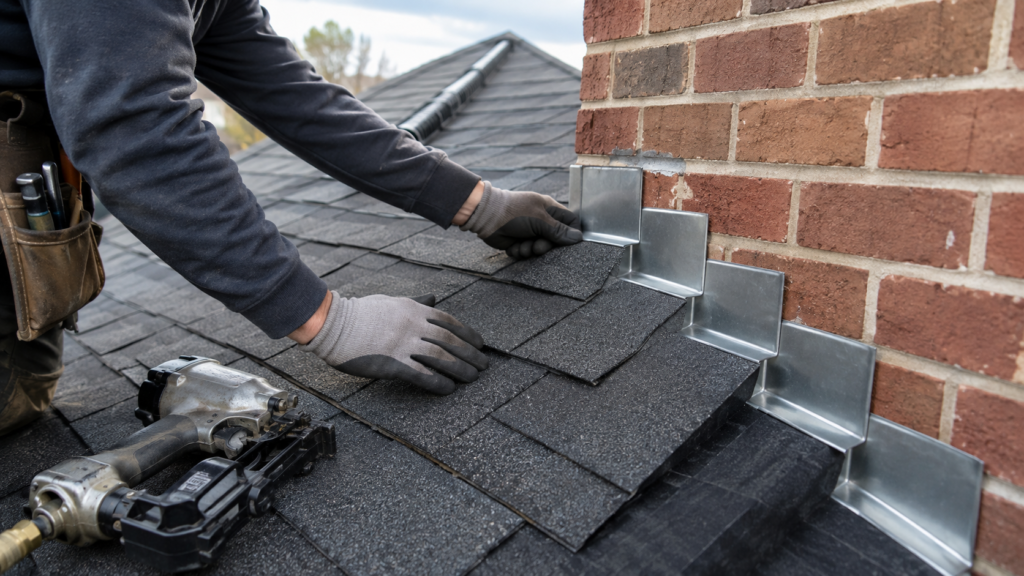
Even a high-quality shingle cannot compensate for incorrect nailing, poorly installed flashing, inadequate starter shingles, improper underlayment, or shortcuts around valleys and penetrations. Installation details are especially important at chimneys, walls, vents, skylights, roof transitions, and low-slope areas where water is more likely to collect or change direction.
Attic Ventilation and Moisture
The attic and roof work together. Trapped heat and moisture can contribute to condensation, deteriorated decking, wet insulation, rusted fasteners, and premature material aging. Ventilation should be evaluated as a complete intake-and-exhaust system instead of assuming that adding one vent will solve every concern.
Central Ohio Weather
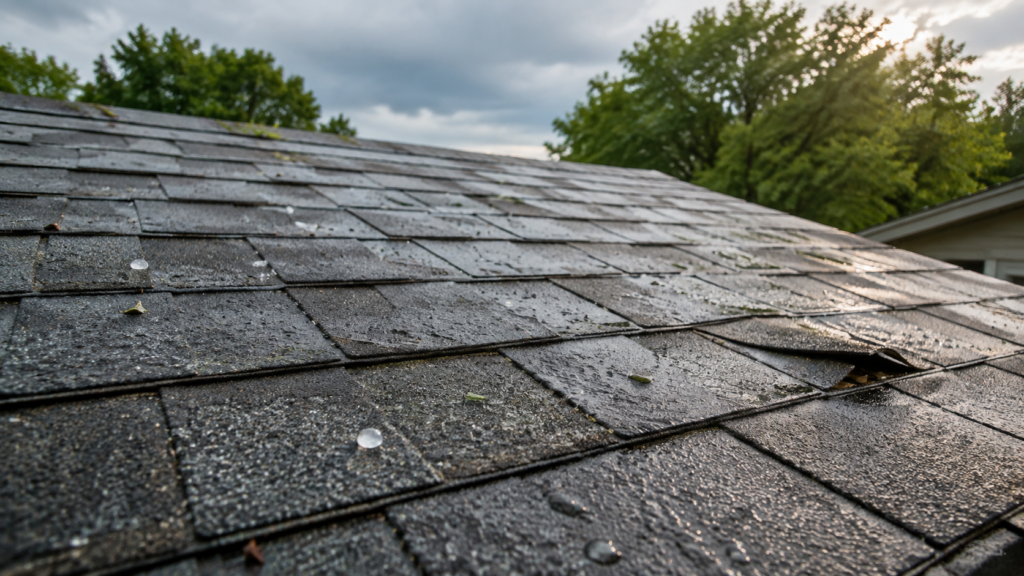
Central Ohio roofs experience summer heat, heavy rain, high winds, hail, snow, ice, and repeated freeze-thaw cycles. A single severe storm can create localized damage, while years of ordinary weather gradually wear the system. Roof slopes facing different directions may even age at different rates because of sunlight, wind, shade, and moisture.
Roof Design
Simple roof shapes generally have fewer transitions and drainage points than roofs with multiple valleys, dormers, walls, chimneys, or additions. Complexity does not automatically mean a roof will fail early, but it increases the number of locations that need precise installation and periodic evaluation.
Trees and Debris
Overhanging limbs can scrape shingles and drop leaves, seeds, or branches onto the roof. Shaded areas may stay damp longer. Debris can also collect in valleys and gutters, slowing drainage. Trees provide useful shade and curb appeal, but branches should not be allowed to rest on the roof or create an obvious impact risk.
Maintenance and Repairs
Small problems can become expensive when ignored. Replacing a missing shingle, resealing an appropriate exposed fastener, correcting a loose flashing detail, or clearing a blocked drainage area may help prevent water from reaching decking and interior materials. Repairs should address the source of the problem rather than only covering the visible symptom.
Age Does Not Automatically Mean Failure
An older roof is not automatically leaking, and a newer roof is not automatically problem-free. Age becomes more meaningful when it appears alongside brittle shingles, recurring leaks, widespread granule loss, damaged flashing, soft decking, repeated repairs, or storm damage across multiple slopes.
Homeowners should also be careful about estimating age based only on appearance. Color variation, algae staining, tree debris, or a previous partial repair can make a roof look older or newer from the ground. Installation records, permits, prior invoices, seller disclosures, and a professional inspection can provide better information.
Signs a Roof May Be Reaching the End of Its Service Life
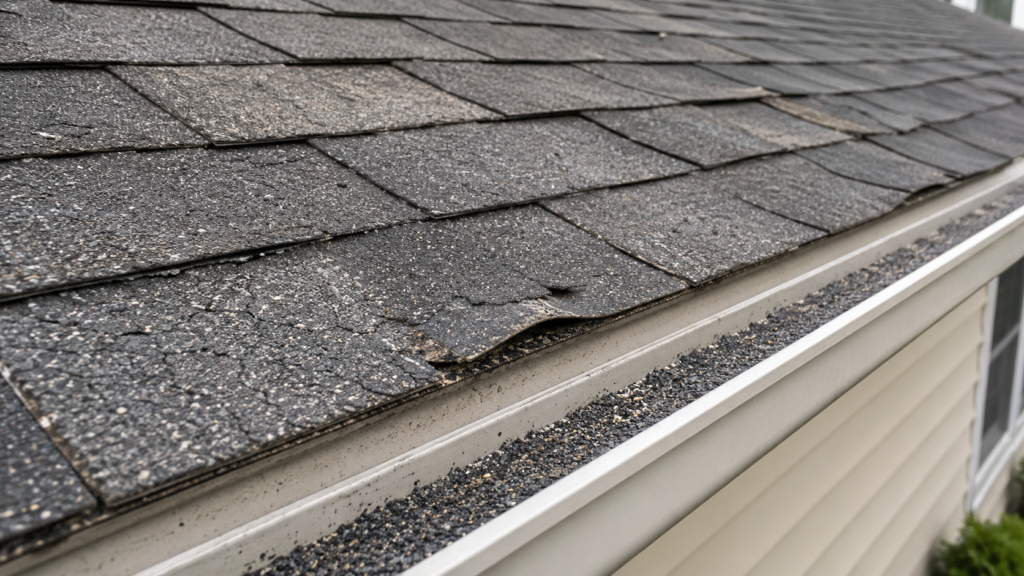
- Shingles are cracking, curling, breaking, or becoming brittle across several areas.
- Granule loss is widespread rather than limited to a few isolated shingles.
- The home has recurring leaks or repairs in different roof sections.
- Flashing and roof-edge components show significant deterioration.
- Decking feels soft or appears sagged, stained, or moisture-damaged.
- Compatible repair materials are difficult to obtain.
- The estimated repair cost is substantial compared with replacement.
One symptom does not always require complete replacement. The roof’s remaining condition, repair history, material availability, and the location of the problem should all be considered.
How Often Should a Roof Be Evaluated?
A visual check from the ground is useful after major weather events and during seasonal home maintenance. Look for missing materials, lifted edges, debris, sagging gutters, damaged siding, or changes around roof penetrations. Do not walk on the roof. Roofing surfaces can be slippery, fragile, steep, and difficult to evaluate safely.
A professional inspection is reasonable when the roof’s age is unknown, a storm has passed through the area, interior staining appears, shingles are found on the ground, or several exterior warning signs develop. Documentation from periodic inspections can also make it easier to compare changes over time.
Can You Extend the Life of a Roof?
No maintenance step can reverse advanced deterioration, but several practices can help a serviceable roof perform as intended:
- Keep gutters and downspouts clear and properly attached.
- Trim branches that contact or threaten the roof.
- Correct leaks and damaged flashing promptly.
- Maintain appropriate attic insulation, air sealing, and ventilation.
- Avoid unnecessary foot traffic and unapproved coatings or sealants.
- Use compatible materials and qualified professionals for repairs.
The goal is not to keep an unsuccessful roof in service indefinitely. It is to prevent avoidable damage, identify problems early, and plan replacement before a failure becomes an emergency.
Frequently Asked Questions
Is a 20-year-old roof automatically bad?
No. Twenty years is a useful point to pay closer attention, but condition matters more than one birthday. Material type, installation, ventilation, weather exposure, and repair history should be evaluated together.
Can a roof last longer than the shingle warranty?
It is possible, but warranty length is not the same as guaranteed service life. Coverage depends on the written warranty, product, installation, registration, exclusions, and cause of damage.
Does hail shorten roof life?
Hail can damage some roofing materials, but severity depends on hail size, wind, material condition, roof slope, and impact location. A qualified inspection can distinguish visible storm concerns from normal aging.
Should I replace a roof before it leaks?
Replacement may be appropriate when deterioration is widespread or reliable repairs are no longer practical. Waiting for an interior leak can allow damage to reach decking, insulation, ceilings, and walls.
How can I find out how old my roof is?
Review seller disclosures, permits, invoices, warranty records, and previous inspection reports. A contractor may estimate age from condition and material style, but documentation is more reliable when available.
Schedule a Roof Evaluation in Central Ohio
Assured Restoration provides roof inspections, repairs, replacements, gutters, siding, and exterior restoration throughout Columbus and the surrounding Central Ohio service area.