

Shingles cover most of a sloped roof, but they cannot form a reliable waterproof connection at every edge, wall, chimney, valley, or penetration. Roof flashing is the metal or purpose-built material installed at those vulnerable transitions to guide water onto the roofing surface and toward the gutters.
Flashing is easy to overlook because much of it is tucked beneath shingles, siding, masonry, or trim. When it is missing, damaged, poorly layered, or separated from adjacent materials, a relatively small defect can create a persistent roof leak.
What Does Roof Flashing Do?
A roof works by shedding water in layers. Each upper component overlaps or directs water onto the component below it. Flashing continues that water-shedding path where the roof changes direction or meets another surface.
Correct flashing does more than cover a joint. Its shape, location, overlap, fastening, and relationship to shingles, underlayment, siding, and masonry all affect performance. Sealant may be part of a specific detail, but caulk alone is not a dependable substitute for properly installed flashing.
Common Types of Roof Flashing
Step Flashing
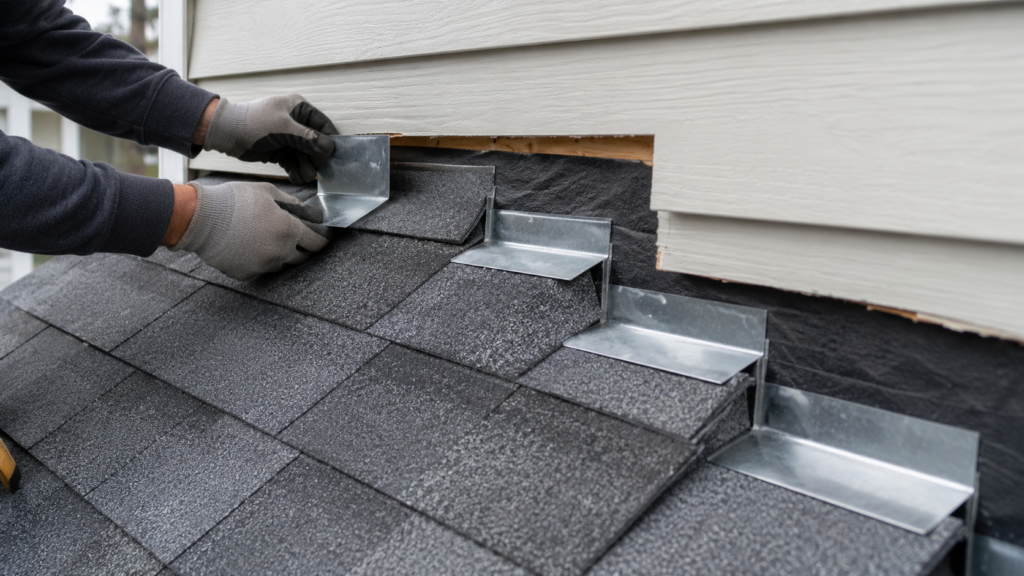
Step flashing is used where a sloped roof meets a vertical sidewall. Individual metal pieces are layered with successive shingle courses so water is directed down and away. The upper edge is typically protected by siding or another wall covering.
Chimney Flashing
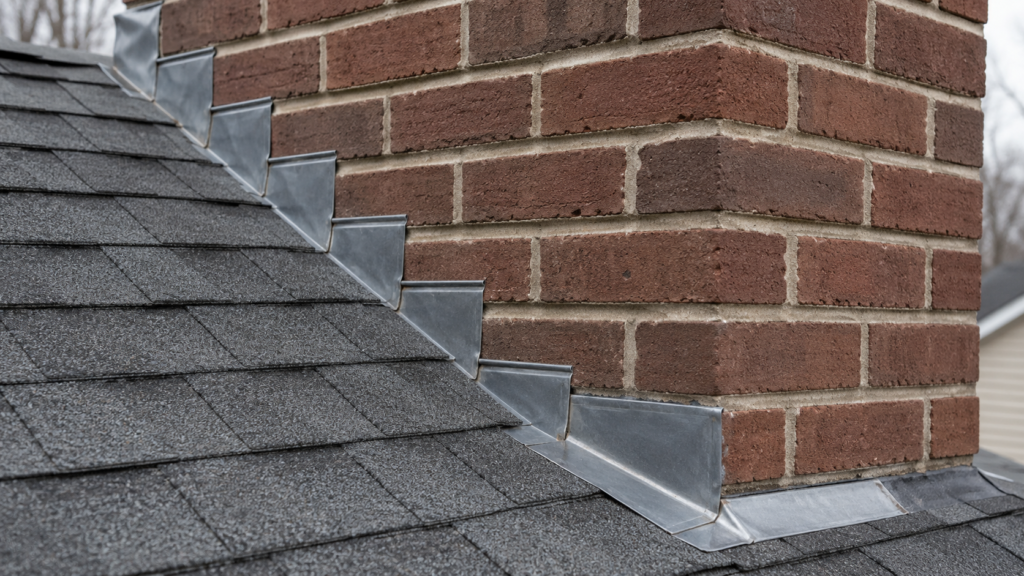
Chimneys may use base flashing, step flashing, counterflashing, and a cricket or saddle on the uphill side when appropriate. Counterflashing is integrated with the masonry and overlaps the roof-side flashing. Because chimneys interrupt water flow and create several transitions, the complete assembly matters.
Valley Flashing
Roof valleys collect water from two slopes and can carry substantial runoff during heavy rain. Depending on the roofing system and valley design, the area may use exposed metal, concealed metal, specialized underlayment, or a manufacturer-approved shingle detail.
Pipe Boots and Penetration Flashing
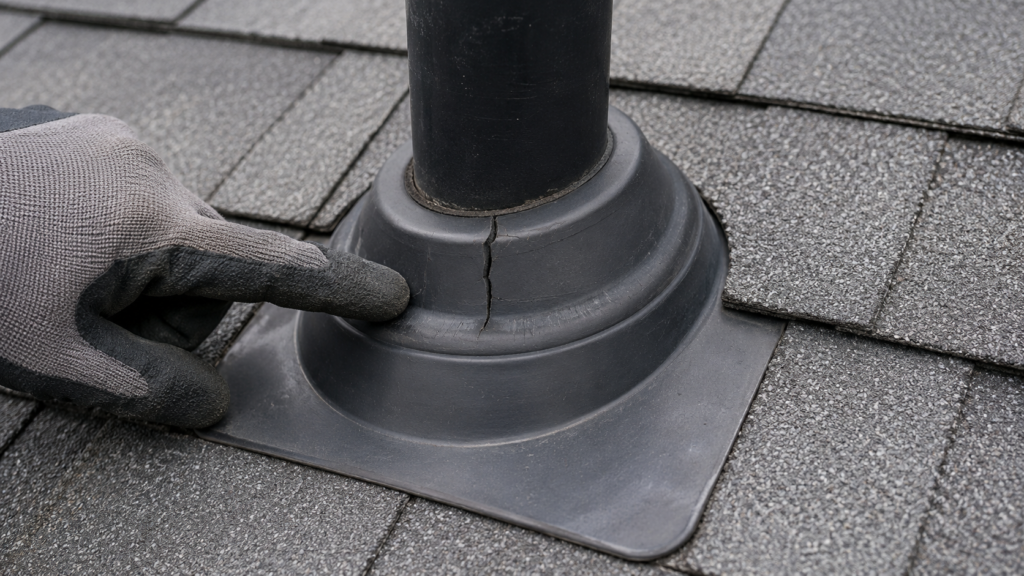
Plumbing vents and other round penetrations commonly use a formed boot with a flange layered into the shingles. The collar or gasket around the pipe can deteriorate from sunlight, temperature changes, age, or movement even when nearby shingles still look serviceable.
Apron, Headwall, and Counterflashing
Apron flashing is often used where the lower side of a wall, chimney, or other obstruction meets the roof. Headwall flashing protects an upper horizontal roof-to-wall connection. Counterflashing overlaps base flashing to prevent water from entering behind it.
Drip Edge
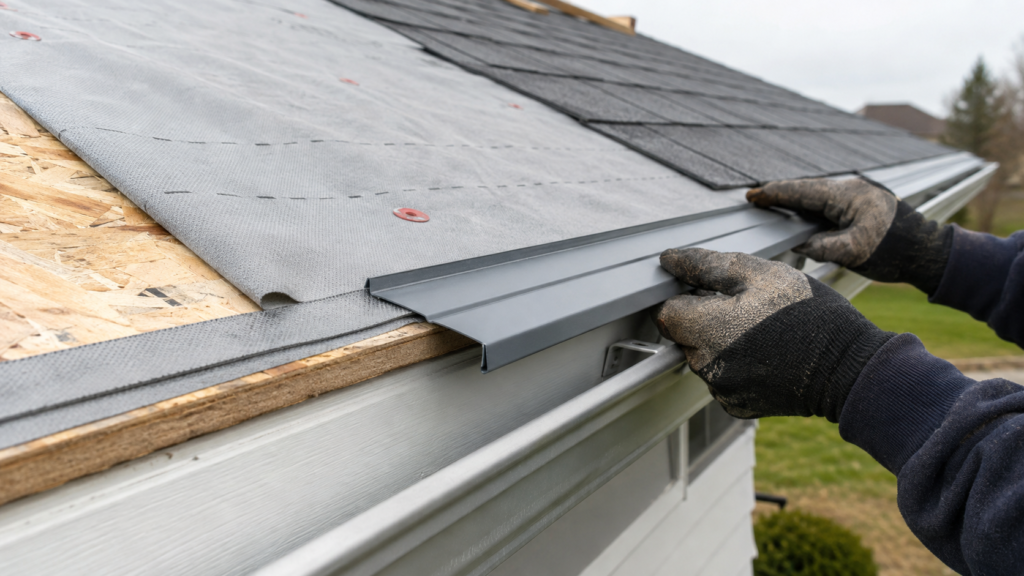
Drip edge is metal flashing along eaves and rakes. It helps protect the roof deck edge and direct runoff at the perimeter. At the eaves, its relationship to the underlayment, fascia, and gutter position needs to be coordinated.
Warning Signs of a Flashing Problem
Flashing problems are not always visible from the ground. A professional evaluation may be warranted when you notice:
- Water stains near a chimney, wall, skylight, or plumbing vent
- Loose, bent, corroded, or visibly missing metal
- Cracked sealant or an exposed fastener at a flashing joint
- Shingles lifting or separating beside a wall or penetration
- Deteriorated pipe-boot collars
- Repeated leaks in the same area after surface patching
- Rot, staining, or peeling finishes near a roof-to-wall connection
A ceiling stain does not always appear directly below the entry point. Water can travel along decking, framing, pipes, or insulation before it becomes visible indoors.
Why Flashing Fails
Flashing can fail because of improper installation, incompatible materials, corrosion, building movement, storm damage, repeated foot traffic, or normal aging. Repairs that rely heavily on roof cement or sealant may temporarily hide the symptom without restoring the intended water path.
Changes to siding, chimneys, skylights, additions, satellite equipment, or roof penetrations can also disturb an otherwise functional detail. Flashing should be evaluated whenever connected materials are removed or replaced.
Can Roof Flashing Be Repaired?
Localized flashing defects can often be repaired when the surrounding shingles, decking, masonry, and wall materials remain in suitable condition. The repair may involve removing adjacent shingles or siding, replacing the flashing, correcting the overlap, and restoring the connected materials.
Widespread deterioration, inaccessible flashing, extensive deck damage, or an aging roof may change the recommendation. A contractor should identify the likely entry point, explain what must be removed, and clarify whether the repair is targeted or part of a larger replacement.
Flashing During a Roof Replacement
A roof replacement provides an opportunity to inspect flashing that was previously concealed. The written scope should state which components will be replaced, which may remain, and how chimneys, walls, valleys, vents, skylights, and drip edge will be handled.
Existing flashing should not be assumed reusable merely because it is present. Its condition, dimensions, integration, and compatibility with the new roofing system all need to be evaluated.
Central Ohio Conditions to Consider
Central Ohio roofs experience wind-driven rain, snow, ice, heat, and repeated freeze-thaw cycles. These conditions can expose small gaps and accelerate deterioration at penetrations and transitions. Seasonal attic condensation can also resemble a roof leak, so the inspection should consider both exterior water entry and interior moisture conditions.
What to Ask During an Inspection
- Which flashing component is allowing or likely allowing water entry?
- Can the condition be documented with photographs?
- Must shingles, siding, or masonry be removed to complete the repair?
- Will the flashing be replaced or only resealed?
- Is the surrounding decking or framing damaged?
- How will the repaired materials be integrated and warranted?
Clear answers help distinguish a durable, layered repair from a short-term surface patch.
Frequently Asked Questions
Is roof flashing always metal?
Many flashing components are metal, but boots, membranes, and manufacturer-specific accessories may also be used. The correct material depends on the location and roofing system.
Can I fix flashing with caulk?
Sealant may be appropriate within a designed detail or as a limited maintenance measure, but it should not replace missing or improperly layered flashing. Repeated caulking often indicates the underlying assembly needs evaluation.
How long does roof flashing last?
There is no single lifespan. Material, installation, exposure, movement, connected surfaces, and maintenance all influence service life. Flashing should be checked during roof inspections and related exterior work.
Does chimney flashing require a mason?
Some repairs involve both roofing and masonry work. The contractor should identify whether mortar joints, counterflashing, brick, stone, or chimney structure also need attention.
Will new shingles stop a flashing leak?
Not necessarily. New shingles must be integrated with correct flashing. Covering a faulty connection without correcting it can allow the leak to continue.
Schedule a Roof-Flashing Inspection in Central Ohio
Assured Restoration evaluates roof leaks, flashing, shingles, gutters, siding, and related exterior components throughout Columbus and surrounding Central Ohio communities.
One Response