
One of the first questions homeowners ask when considering a roof replacement is, “How much is a new roof going to cost?”
The honest answer is that there is no single price that applies to every home.
For general planning purposes, many asphalt-shingle roof replacements in the Columbus area may fall between approximately $8,000 and $25,000 or more. However, a smaller and simpler roof could cost less, while a large, steep, complex, or premium-material roof could cost considerably more.
The price depends on much more than the square footage of the home. Roof size, pitch, materials, accessibility, ventilation, existing damage, and labor requirements can all affect the final estimate.
The only way to receive an accurate price for your property is to have the roof professionally measured and inspected.
What Determines the Cost of a New Roof?
Roofing contractors evaluate several factors when preparing a roof replacement estimate.
Understanding these factors can help you compare estimates and know what you are actually paying for.
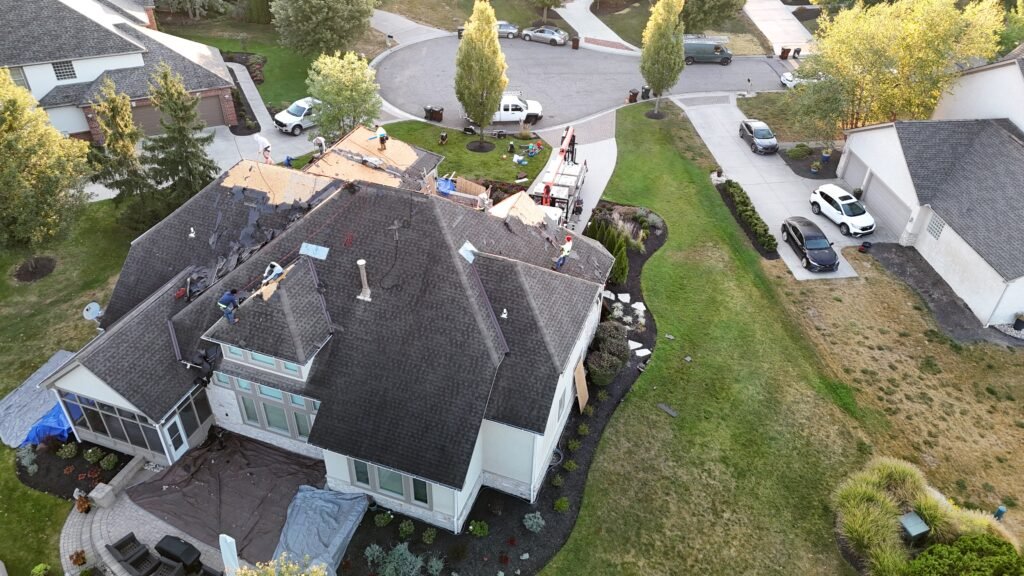
1. The Actual Size of the Roof
The square footage of your home is not necessarily the same as the surface area of your roof.
Roof size is affected by:
- The home’s footprint
- Roof pitch
- Attached garages
- Porches
- Additions
- Overhangs
- Multiple roof sections
A steep or highly dimensional roof has more surface area than a flat measurement of the home might suggest.
Roofing materials are commonly measured in “squares.” One roofing square covers approximately 100 square feet of roof surface.
The larger the roof, the more shingles, underlayment, flashing, labor, and disposal capacity the project will require.
2. Roof Pitch and Complexity
A simple roof with two broad slopes will generally require less labor than a roof with multiple peaks, valleys, dormers, and intersecting sections.
Complexity may increase the cost because crews must spend more time:
- Cutting and fitting materials
- Installing flashing
- Working around roof penetrations
- Protecting valleys
- Setting up safety equipment
- Moving materials across the roof
Steep roofs may also require additional safety procedures and specialized equipment.
3. The Roofing Material You Choose
Asphalt shingles are a common choice for Central Ohio homes because they offer a practical balance of appearance, performance, and cost.
However, pricing can vary between:
- Basic three-tab shingles
- Architectural shingles
- Designer or luxury shingles
- Impact-resistant shingles
- Metal roofing
- Specialty roofing materials
The shingle itself is only one component of the roofing system. The complete system may also include underlayment, ice and water protection, starter shingles, ridge-cap shingles, ventilation products, flashing, drip edge, and sealants.
A lower material price does not always result in the best long-term value. Homeowners should consider expected performance, warranty coverage, installation quality, and the material’s suitability for the home.
4. Removing and Disposing of the Existing Roof
Most roof replacement projects include tearing off the existing roofing materials.
The cost may depend on:
- The number of existing layers
- The type of material being removed
- The total roof size
- Disposal fees
- Dumpster requirements
- Property access
- The amount of cleanup required
Removing multiple layers will generally require more labor and create more material for disposal.
5. Roof Decking Repairs
The roof decking is the structural surface beneath the roofing materials.
Its full condition may not be visible until the old shingles and underlayment are removed. If sections of decking are soft, rotted, delaminated, or otherwise damaged, they may need to be replaced before the new roofing system is installed.
Because hidden decking damage cannot always be confirmed during the original inspection, homeowners should ask how potential decking replacement is handled in the estimate.
6. Flashing and Roof Penetrations
Roofs often contain several areas that require detailed installation work, including:
- Chimneys
- Skylights
- Plumbing vents
- Exhaust vents
- Valleys
- Sidewalls
- Headwalls
- Satellite mounts
These areas must be properly flashed and sealed to direct water away from vulnerable openings.
A roof with numerous penetrations or complicated flashing details may require more labor and materials than a basic roof.
7. Ventilation Requirements
Proper attic ventilation is an important part of a complete roofing system.
Depending on the home, a replacement project may involve:
- Ridge vents
- Box vents
- Intake vents
- Soffit ventilation
- Bath or kitchen exhaust corrections
Ventilation problems should be identified before the new roof is installed whenever possible. Simply replacing shingles without addressing an underlying airflow issue may leave the homeowner with continued attic moisture or heat concerns.
8. Accessibility Around the Home
Contractors must be able to safely deliver materials, position equipment, protect landscaping, and remove debris.
Cost may be affected by:
- Limited driveway access
- Closely spaced neighboring homes
- Extensive landscaping
- Fences
- Pools
- Uneven terrain
- Difficult dumpster placement
- Multi-story construction
Challenging access can increase the amount of labor needed to complete the project safely.
9. Warranties and Installation Standards
Not all roofing estimates include the same materials, installation procedures, or warranty protection.
When comparing prices, ask whether the estimate includes:
- Manufacturer-approved materials
- Workmanship coverage
- Manufacturer warranty options
- New flashing where required
- Ice and water protection
- Drip edge
- Starter shingles
- Ridge-cap shingles
- Ventilation
- Cleanup
- Permit costs when applicable
The lowest estimate may exclude components that another contractor includes.
Compare the complete scope of work—not just the final number at the bottom of the page.
Can a Roof Be Repaired Instead of Replaced?
Not every roofing problem requires a complete replacement.
A repair may be appropriate when:
- Damage is limited to a small area
- The remaining roofing system is in good condition
- Compatible replacement materials are available
- There is no widespread deterioration
- The roof has not required repeated repairs
Replacement may make more sense when:
- Damage affects multiple sections
- Shingles are brittle, curling, or failing
- The roof has recurring leaks
- There is widespread granule loss
- Repairs would only provide a temporary solution
- The roof is approaching the end of its practical service life
A professional inspection can help determine which option makes the most sense for your home.
Will Homeowners Insurance Pay for a New Roof?
Homeowners insurance may cover roof damage caused by a covered event, such as certain hail or windstorms. It generally does not pay for a roof replacement simply because the roof is old, worn out, or poorly maintained.
Coverage depends on the homeowner’s policy, deductible, cause of damage, roof condition, and other policy provisions.
A roofing contractor can inspect and document the physical damage, but the insurance company makes the final coverage decision.
Homeowners should review their policy and speak directly with their insurance carrier or agent when they have coverage questions.
How to Compare Columbus Roofing Estimates
Do not compare estimates based only on price.
Ask each contractor:
- Which shingle and roofing system are included?
- Is removal of the old roof included?
- How will damaged decking be priced?
- Are flashing and ventilation included?
- What property-protection measures will be used?
- Who handles cleanup?
- Is the contractor insured?
- What workmanship warranty is included?
- Are manufacturer warranty options available?
- Who will supervise the installation?
- How are unexpected changes communicated?
A detailed written estimate should explain the scope of the project clearly.
Frequently Asked Questions
What is the average cost of a new roof in Columbus, Ohio?
Many asphalt-shingle roof replacements may fall within a broad planning range of approximately $8,000 to $25,000 or more. The actual cost depends on the size, pitch, materials, complexity, access, and condition of the existing roof.
Can I receive a roof price based only on my home’s square footage?
A home’s square footage may provide a rough starting point, but it is not enough for an accurate estimate. The contractor must account for the roof’s pitch, layout, waste factor, material requirements, and installation details.
Why are two roofing estimates so different?
The estimates may include different shingles, underlayments, ventilation products, flashing work, warranties, cleanup procedures, or allowances for damaged decking. Review the complete scope of work before comparing prices.
How long does a roof replacement take?
Many residential asphalt-shingle roofs can be completed relatively quickly, but the timeline depends on roof size, complexity, weather, material availability, and the amount of repair work discovered during removal.
Does a more expensive shingle always mean a better roof?
Material quality matters, but installation quality is equally important. A premium shingle will not perform as intended if flashing, ventilation, underlayment, or other components are installed incorrectly.
Are financing options available for roof replacement?
Financing availability depends on the contractor and homeowner qualifications. Ask Assured Restoration which payment or financing options are currently available for your project.
Get an Accurate Roof Replacement Estimate in Columbus
Online price ranges can help with planning, but they cannot account for the specific design and condition of your home.
Assured Restoration provides professional roof inspections and detailed replacement estimates throughout Columbus and the surrounding Central Ohio area.
Our team will evaluate your roof, discuss your material options, and clearly explain the recommended scope of work.