

A roof replacement is a major exterior project, so it is natural to wonder whether the gutters should be replaced at the same time. The answer is not always yes.
Gutters that are properly sized, securely attached, correctly sloped, and free of significant damage may continue to perform well after a new roof is installed. Gutters that are sagging, leaking, undersized, or attached to deteriorated fascia may be worth replacing while the roof-edge components are already being evaluated.
The best decision comes from looking at the roof and gutter system together rather than automatically replacing everything or ignoring obvious drainage problems.
How the Roof and Gutter System Work Together
A roof is designed to shed water toward the eaves. Several components then work together to move that water away from the home:
- Shingles direct rainwater down the roof slopes.
- Underlayment provides a secondary layer of protection beneath the shingles.
- Drip edge helps direct water away from the roof edge and toward the gutter.
- Gutters collect runoff along the eaves.
- Downspouts carry the water toward a safe discharge point away from the foundation.
- Fascia supports the roof edge and commonly provides the mounting surface for gutter hangers.
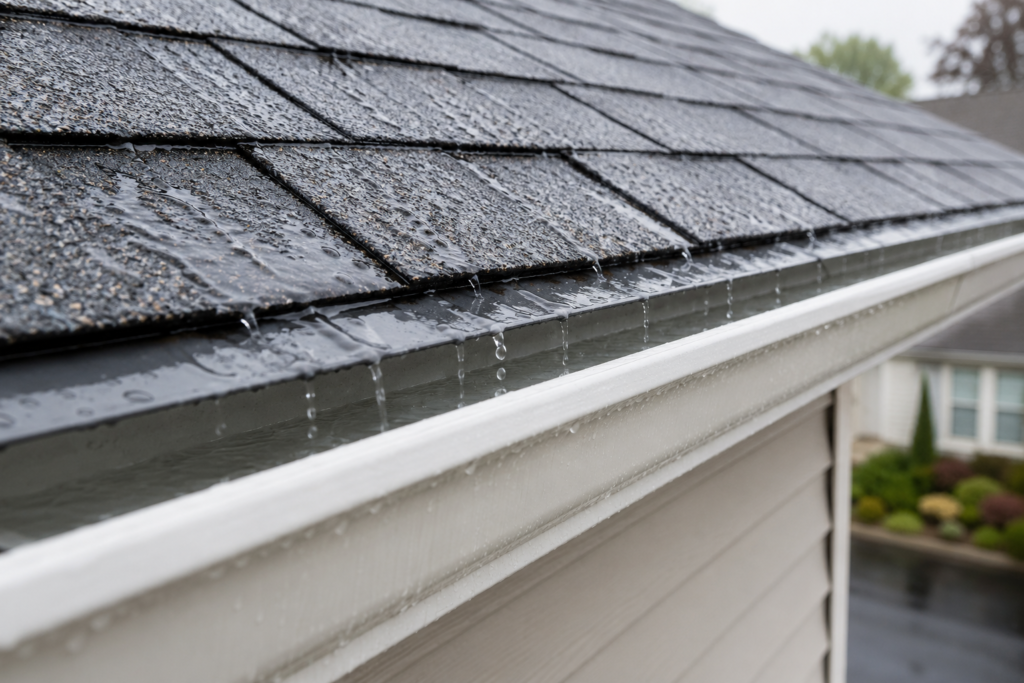
When one part of this system is damaged or poorly aligned, water can spill behind the gutter, soak the fascia, stain the siding, collect near the foundation, or overflow during heavy rain.
When Existing Gutters Can Usually Stay
A roof replacement does not automatically require new gutters. Existing gutters may be suitable for reuse when they:
- Remain securely fastened to solid fascia boards
- Do not sag or pull away from the home
- Have the correct slope toward the downspouts
- Do not have widespread corrosion, holes, or cracked sections
- Do not leak repeatedly at seams or corners
- Are large enough to handle runoff from the roof
- Have downspouts that drain properly
- Match the homeowner’s plans for the finished exterior
The contractor should still inspect the gutters before work begins. A system can look acceptable from the ground while having loose hangers, damaged end caps, poor pitch, or hidden fascia problems.
Signs That Gutter Replacement May Make Sense
Replacing the gutters during or shortly after the roof project may be practical when several of the following conditions are present:
- The gutters are visibly sagging or uneven
- Sections pull away from the fascia
- Water leaks from multiple seams, corners, or end caps
- Rust, corrosion, cracks, or holes are widespread
- Water frequently overflows even when the gutters are clean
- The gutter size or number of downspouts is inadequate for the roof area
- Water runs behind the gutter instead of entering it
- Fascia boards are soft, rotted, or damaged
- The gutters have required repeated repairs
- The homeowner wants to change the color or update the entire exterior
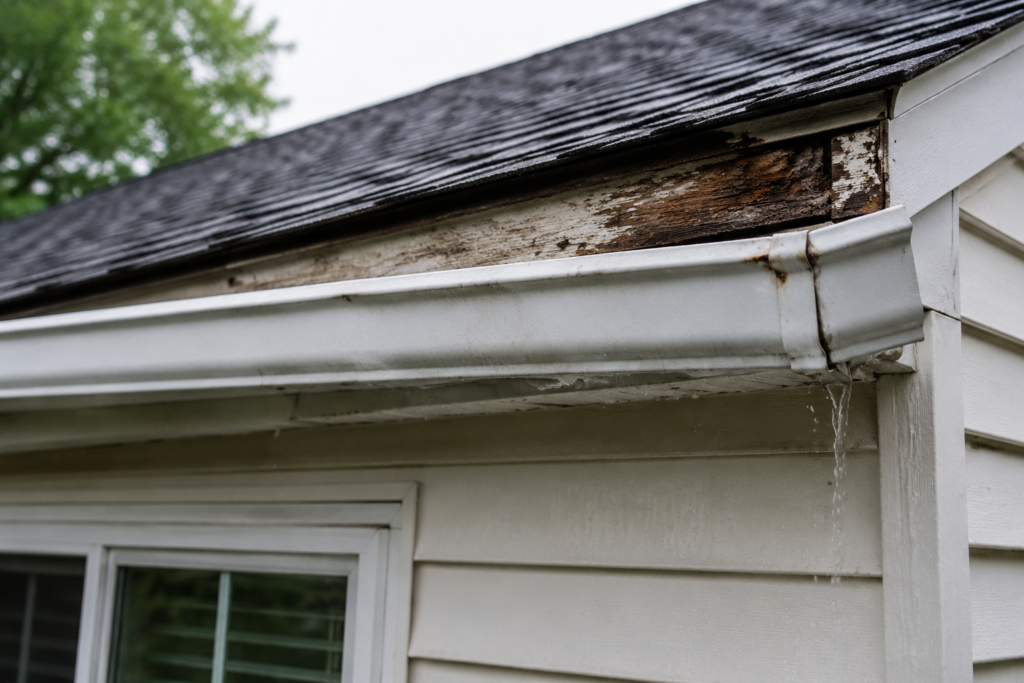
One isolated leak may only need a repair. Widespread issues across several elevations are more likely to justify replacement.
Should Gutters Be Removed During a Roof Replacement?
Whether gutters should be removed depends on the roof design, gutter attachment, fascia condition, drip-edge plan, and how the contractor intends to protect the system.
Some roof replacements can be completed while the gutters remain in place. In other situations, temporarily removing and reinstalling healthy gutters can improve access to the roof edge and reduce the chance of damage from ladders, falling shingles, tools, or tear-off debris.
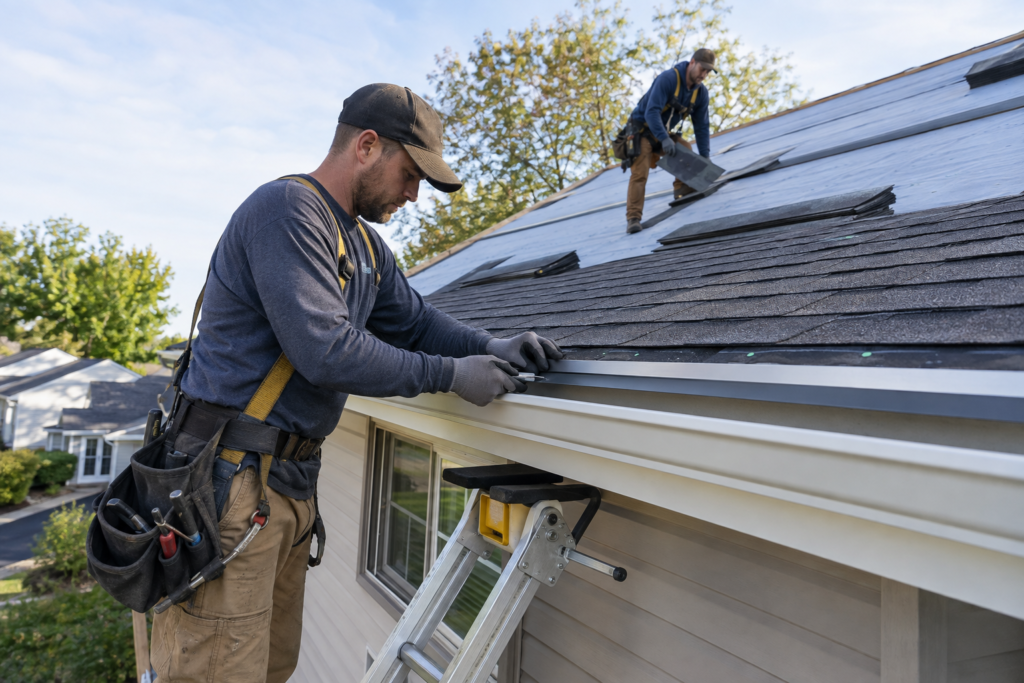
There is no single rule for every home. The important point is that the plan should be discussed before the project begins. The written scope should explain whether the gutters will stay, be protected, be temporarily removed, or be replaced.
Roof-Edge Details That Need to Be Coordinated
Drip Edge
Drip edge is metal flashing installed along the roof perimeter. It helps direct water away from the roof edge and into the gutter while protecting the fascia and underlying components. It should be integrated correctly with the underlayment, shingles, and gutter position.
Fascia
Gutters are commonly fastened to the fascia board. If the fascia is soft, rotted, split, or pulling away, new gutter hangers will not have a reliable attachment point. Damaged fascia should be identified before gutters are reinstalled.
Starter Shingles and Eave Protection
The lower edge of the roofing system includes starter shingles and, where required or recommended, additional leak protection. These materials need to be installed without interference from gutter hangers or old metal components.
Gutter Height and Position
A gutter that sits too high may interfere with the shingle edge. A gutter that sits too low may allow water to overshoot during heavy rain. The front edge, back edge, pitch, and relationship to the drip edge all affect performance.
Downspout Placement
Downspouts need enough capacity and should discharge water away from the foundation. Large roof sections, valleys, and steep slopes may send more water toward specific gutter areas, which can require additional downspouts or better placement.
Is It Better to Replace the Roof or Gutters First?
When both systems are being replaced, the roofing work is commonly completed first so the new roof-edge flashing and drip edge can be installed correctly. The new gutters are then measured and attached after the roof is finished.
Project order can vary when fascia repairs, unusual roof details, copper gutters, box gutters, or custom exterior work are involved. Coordinating both scopes through one plan helps prevent one contractor from undoing or damaging the other contractor’s work.
Questions to Ask Before the Roof Project Begins
When the existing gutters will remain, ask the roofing contractor:
- Will the gutters and downspouts be inspected before work begins?
- How will ladders be placed without crushing or bending the gutters?
- How will tear-off debris be kept out of the gutter system?
- Will the roof-edge metal and drip edge integrate correctly with the existing gutters?
- What happens if hidden fascia damage is discovered?
- Will loose hangers or disconnected downspouts be noted?
- Who is responsible if a gutter section is damaged during the project?
- Will the gutters be cleaned and checked for flow after the roof is complete?
Clear answers make it easier to understand what is included and prevent last-minute surprises.
Benefits of Coordinating Roof and Gutter Work
When both systems need attention, completing the projects together can provide several advantages:
- The roof edge, fascia, drip edge, gutters, and downspouts can be planned as one drainage system.
- Damaged fascia can be repaired before new gutters are attached.
- The homeowner can choose coordinated colors and exterior finishes.
- Crews may avoid repeating setup, delivery, protection, and cleanup work.
- The home experiences one coordinated period of exterior construction instead of two separate projects.
- The final water path can be checked after all components are installed.
These benefits do not mean replacement is always necessary. Keeping a functional gutter system is often the better value when it is in good condition and compatible with the new roof.
Central Ohio Conditions to Consider
Central Ohio gutters need to manage spring rain, summer thunderstorms, falling leaves, winter snow, and freeze-thaw cycles. Homes with large roof areas, steep slopes, multiple valleys, or heavy tree cover may place additional demands on the drainage system.
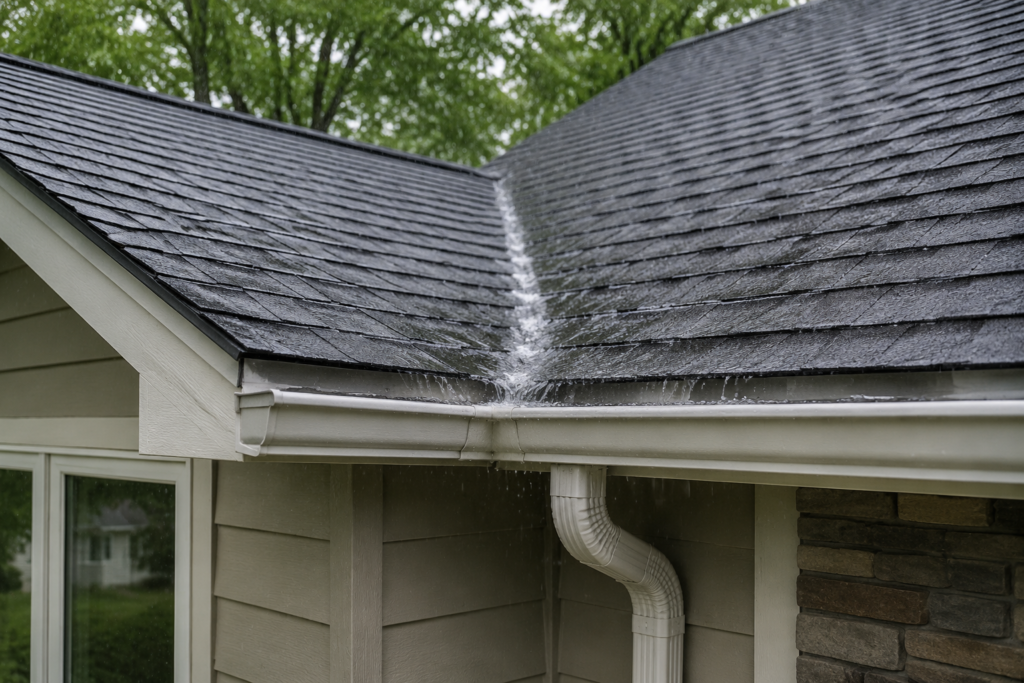
A contractor should consider more than the gutter’s appearance. Capacity, slope, downspout location, roof geometry, fascia condition, and where the water discharges are all important.
Gutter guards may reduce the amount of large debris entering the system, but they do not eliminate the need for inspection or maintenance. The best guard option depends on the roof, tree coverage, gutter design, and the type of debris around the property.
Frequently Asked Questions
Do roofers have to remove gutters to replace a roof?
No. Some roofs can be replaced while the existing gutters remain in place. Removal may be recommended when access is limited, the gutters could be damaged, fascia work is needed, or the roof-edge details cannot be completed correctly with the gutters attached.
Can old gutters damage a new roof?
Gutters do not normally damage shingles simply because they are older. Problems can occur when gutters are installed too high, pull away from the fascia, allow water to run behind them, or interfere with the drip edge and roof edge.
Will homeowners insurance pay for new gutters with a roof claim?
Insurance may include gutter damage when it was caused by a covered event, but it generally does not cover replacement based only on age, wear, or appearance. The insurance company determines coverage under the specific policy.
Should gutter guards be installed with new gutters?
They can be added during gutter installation, but they are optional. Homeowners should compare how different guard systems handle leaves, small debris, snow, and maintenance before choosing one.
Can gutters be reused after fascia repairs?
Often, yes, when the gutters are still in good condition and can be removed without damage. The contractor should confirm that the system can be reattached securely and maintain the correct slope.
Schedule a Roof and Gutter Evaluation in Central Ohio
You should not have to replace a working gutter system simply because the roof is being replaced. At the same time, obvious drainage or fascia problems should not be covered up by a new roof project.