

Residential gutters must collect water from the roof and deliver it to downspouts without repeated overflow, leakage, or water running behind the system. Five-inch and six-inch K-style gutters are common options, but the right choice cannot be made from width alone.
Roof area, pitch, valleys, local rainfall, gutter shape, downspout capacity, outlet locations, slope, fascia condition, and discharge points all affect performance. A properly designed 5-inch system may serve one home well, while another home needs 6-inch gutters, additional downspouts, or a different layout.
The Basic Difference
A 6-inch gutter has a larger cross-section than a comparable 5-inch profile and can hold and convey more water when the rest of the system is designed accordingly. It also creates a larger visual line along the eave and normally costs more in material and installation.
The extra capacity can be valuable on large or steep roofs, below valleys, and where long runs must serve broad roof sections. However, simply increasing gutter width does not fix an inadequate number of outlets, clogged downspouts, poor slope, low placement, or a discharge problem at the ground.
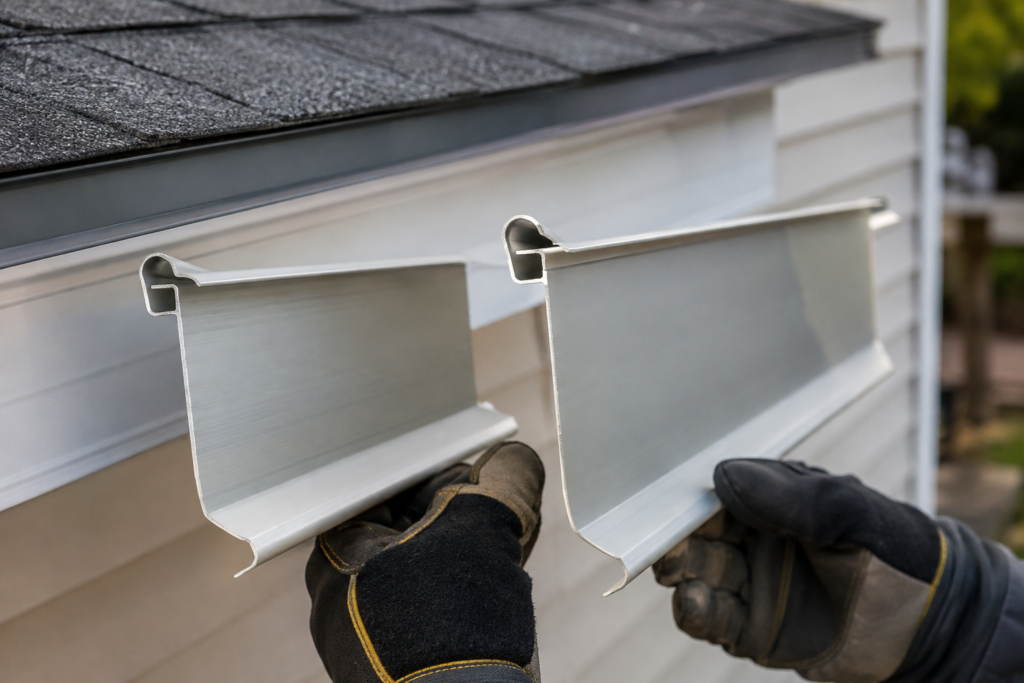
When 5-Inch Gutters May Be Appropriate
Five-inch gutters are widely used on homes with manageable roof areas and straightforward drainage. They may be a suitable choice when:
- Roof sections feeding each run are modest in size
- The pitch and valley layout do not concentrate unusually high runoff
- Downspouts are correctly sized, placed, and unobstructed
- The gutters have proper slope and roof-edge positioning
- There is a safe route to discharge water away from the foundation
- Existing 5-inch gutters have handled heavy rain without chronic overflow when clean
A contractor should still calculate or evaluate the roof drainage rather than selecting 5-inch gutters only because they are common.
When 6-Inch Gutters May Make Sense
Six-inch gutters may be worth considering when the home has:
- Large roof planes feeding a limited length of gutter
- Steep slopes that move water quickly toward the eaves
- Multiple valleys concentrating runoff into one area
- Long gutter runs between available downspout locations
- Chronic overflow after debris, slope, outlet, and placement issues are corrected
- Architectural or metal roofing details that produce concentrated flow
- A design that benefits from larger outlets and downspouts
Six-inch gutters are not limited to large commercial-looking homes. They can be visually appropriate on many residences when the fascia, roof edge, trim, and proportions are considered.
What Determines Gutter Size?
Roof Area
The amount of roof draining to each gutter run is more important than the home’s total floor area. Dormers, additions, garages, porches, and intersecting roof planes change how runoff is distributed.
Roof Pitch
Steeper roofs can deliver water toward the gutter rapidly. Pitch is one factor in sizing, but it should be considered with area, shape, and outlet capacity.
Valleys and Concentrated Flow
A valley can funnel water from multiple slopes toward a short section of gutter. This area may need greater capacity, a well-placed downspout, a modified run, or another professionally designed detail.
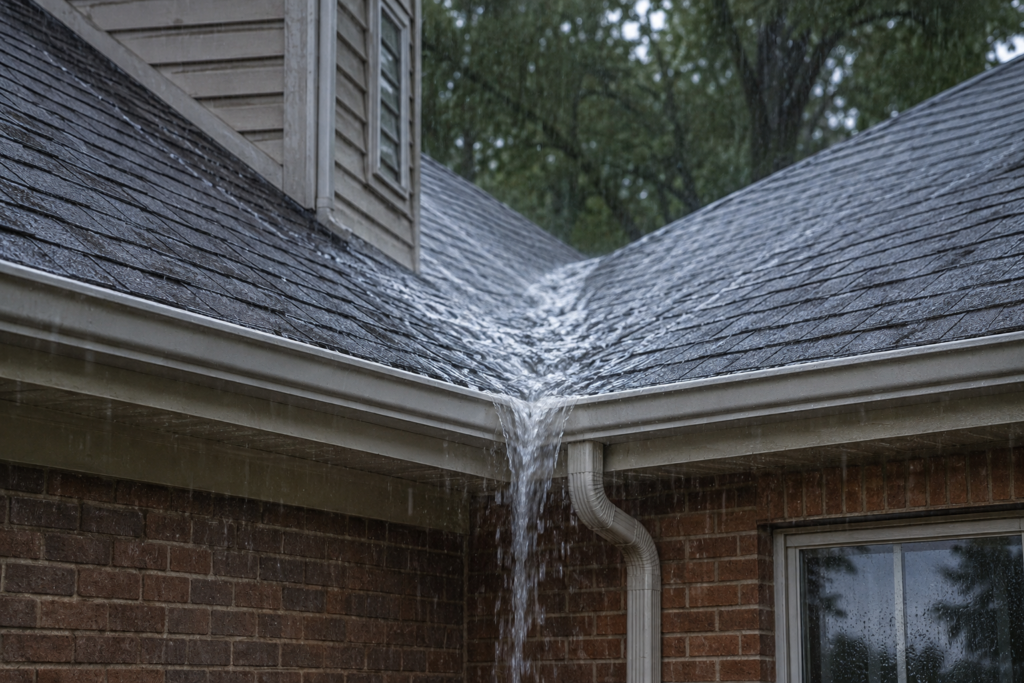
Rainfall Intensity
Gutter design should account for local rainfall intensity, not merely average annual precipitation. Short, heavy thunderstorms can test the capacity of an otherwise clean system.
Gutter Profile
K-style, half-round, box, and custom gutters do not have identical cross-sections or flow characteristics. The stated width is only part of the specification.
Downspouts Matter as Much as Gutters
A gutter is a collection channel; the downspout is the outlet. Too few downspouts, small outlets, restrictive elbows, debris, or long runs can allow water to back up even in a larger gutter. Upgrading to 6-inch gutters often works best when compatible larger outlets and downspouts are part of the design.
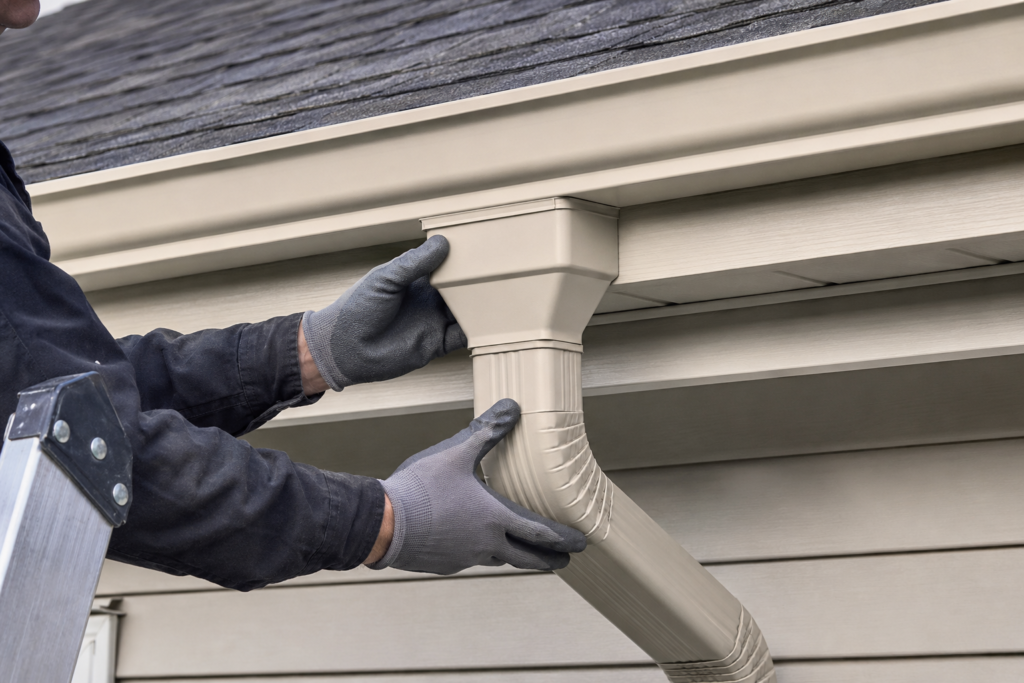
Placement also matters. Adding an outlet near a valley or dividing a long run may improve performance more than increasing width alone.
Slope, Hangers, and Roof-Edge Position
Gutters need a controlled slope toward the outlets. They also need hangers spaced and fastened for the selected system and fascia conditions. A larger gutter filled with water places additional load on its attachment points.
The gutter must sit in the correct relationship to the roof edge and drip edge. Too low, and fast-moving runoff may overshoot. Too high, and the gutter may interfere with the roofing edge or become vulnerable to sliding snow and ice.
Do Larger Gutters Prevent Every Overflow?
No. Leaves, shingle granules, nests, ice, poor pitch, clogged underground drains, insufficient outlets, and water arriving from an unusual roof detail can overwhelm either size. Gutter guards may reduce large debris but do not eliminate inspection and maintenance.
What About the Water at Ground Level?
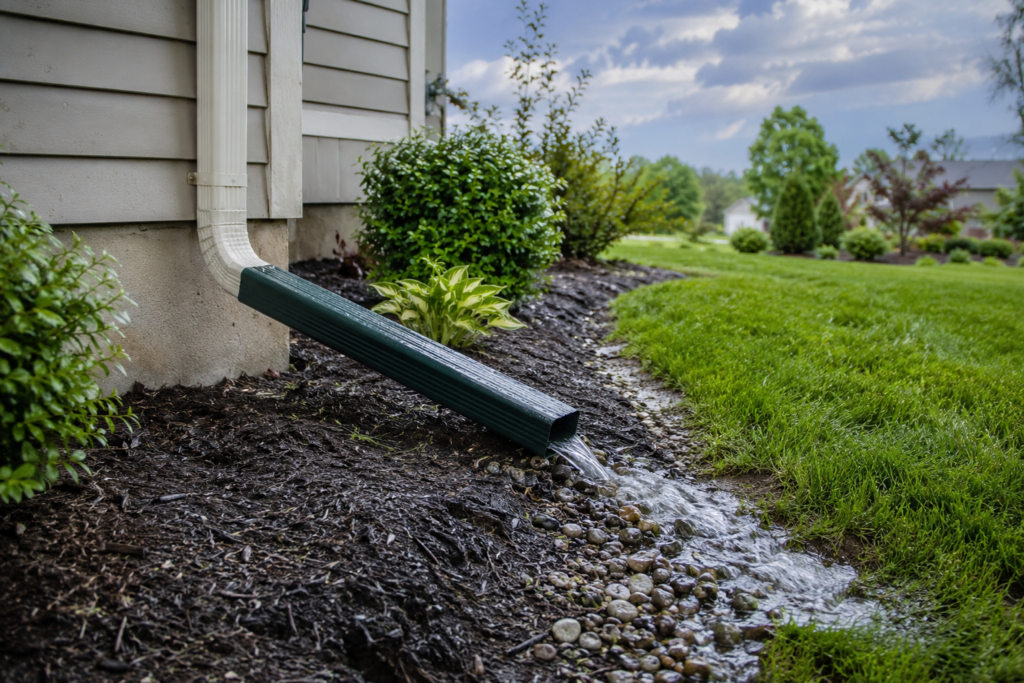
More drainage capacity is useful only if the collected water has a safe destination. Downspouts should discharge away from the foundation through an appropriate extension, splash block, drainage system, or approved connection. Soil settlement, blocked underground lines, and short extensions can send water back toward the house.
Central Ohio Considerations
Central Ohio gutters handle spring rain, summer thunderstorms, leaves, snow, ice, and freeze-thaw cycles. Homes with mature trees or complex rooflines may need more frequent inspection regardless of gutter size. Winter conditions also make secure hangers, fascia integrity, and roof-edge coordination important.
How to Compare Gutter Proposals
- Exact gutter profile, material thickness, finish, and size
- Downspout and outlet dimensions, number, and locations
- Hanger type, spacing, and attachment method
- Fascia repair allowances and drip-edge coordination
- Plan for valleys and high-volume roof areas
- Discharge locations and any underground-drain limitations
- Cleanup, warranties, and maintenance guidance
A useful recommendation should explain why a size and layout fit the roof rather than presenting 6-inch gutters as an automatic upgrade for every property.
Frequently Asked Questions
Are 6-inch gutters better than 5-inch gutters?
They have greater capacity, but they are not automatically better for every home. Roof geometry, downspouts, slope, fascia, discharge, appearance, and budget should guide the decision.
Can I keep my existing downspouts with larger gutters?
Possibly, but small outlets or downspouts can limit the benefit of a larger gutter. The complete system should be evaluated and sized together.
Will 6-inch gutters look too large?
They create a stronger line at the eave, but often look proportional on medium and large homes. Ask to view local examples or a profile sample beside the fascia.
Do I need 6-inch gutters because my gutters overflow?
Not necessarily. Cleaning, outlet blockages, improper slope, low positioning, insufficient downspouts, or poor discharge may be the cause. Diagnose the system before choosing a size.
Should gutters be replaced with the roof?
Only when condition, capacity, fascia repairs, exterior plans, or roof-edge coordination justify it. Healthy gutters can sometimes remain or be temporarily removed and reinstalled.