
Siding shapes the appearance of a home, but its more important job is to help protect the wall assembly from weather. A damaged panel does not automatically mean the entire exterior must be replaced. However, widespread deterioration, recurring moisture problems, or a system near the end of its useful life may make replacement the more practical option.
The decision should account for the siding material, extent of damage, condition of trim and wall components, availability of matching products, and the homeowner’s plans for the property.
Exterior Warning Signs
Cracks, Holes, or Impact Damage
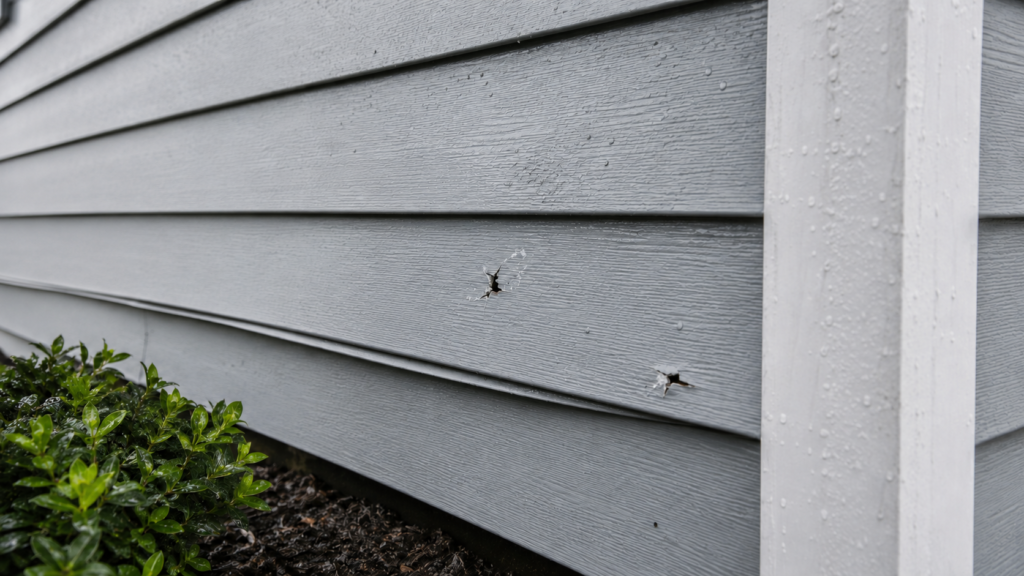
Cracks and holes can allow water, insects, and wind to reach materials behind the siding. A small isolated defect may be repairable. Damage spread across multiple walls, or panels weakened by age and repeated impacts, can point toward replacement.
Loose, Missing, or Warped Sections
Siding should remain secured while allowing any movement required by the product. Panels that rattle, bow, buckle, pull away, or disappear after storms should be evaluated for fastening, installation, heat exposure, substrate conditions, and wind damage.
Rot, Soft Areas, or Delamination
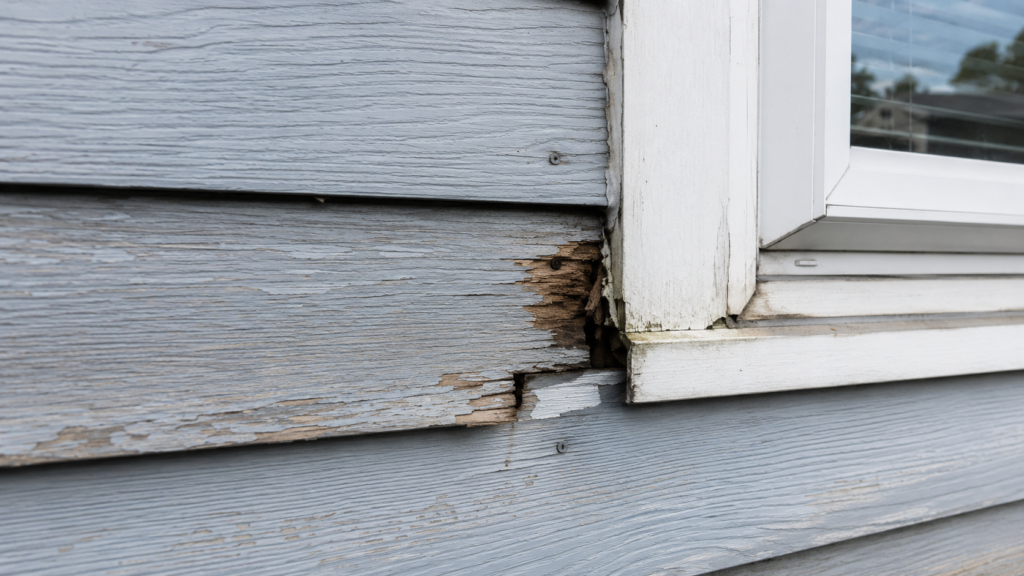
Wood-based products may rot when moisture remains trapped. Other materials can swell, delaminate, or deteriorate when coatings, joints, or clearances fail. Softness near the bottom of walls, windows, doors, decks, or roof intersections deserves prompt attention.
Persistent Fading, Peeling, or Finish Failure
Normal weathering is different from widespread finish failure. Peeling paint, chalking, fading, or repeated coating problems may indicate age, moisture, incompatible finishes, or poor preparation. Repainting may be reasonable if the siding itself remains sound.
Open Seams and Failed Trim Connections
Corners, window and door trim, utility penetrations, roof-to-wall connections, and transitions between materials need careful detailing. Open joints or failed sealant can expose the wall assembly even when field panels appear intact.
Repeated Repairs
Occasional repairs are normal. If different walls continually need patching, fastening, caulking, or repainting, the cumulative cost and inconsistent appearance may make a coordinated replacement more sensible.
Interior Clues That May Relate to Siding
Water stains, damp drywall, musty odors, peeling interior paint, or swollen trim along exterior walls can indicate moisture entry, but they do not prove the siding is the only source. Windows, doors, roof flashing, plumbing, condensation, and foundation conditions should also be considered.
An inspection should trace the moisture path rather than assuming the most visible exterior defect caused every interior symptom.
When a Siding Repair May Be Enough
Repair is often reasonable when damage is limited, the surrounding siding is secure and serviceable, replacement pieces can be integrated correctly, and the underlying wall remains dry and sound.
- One or two damaged panels after a localized impact
- A loose section that can be properly resecured
- A repairable trim or flashing detail
- Minor finish wear on otherwise sound material
- A small area where a close visual match is available
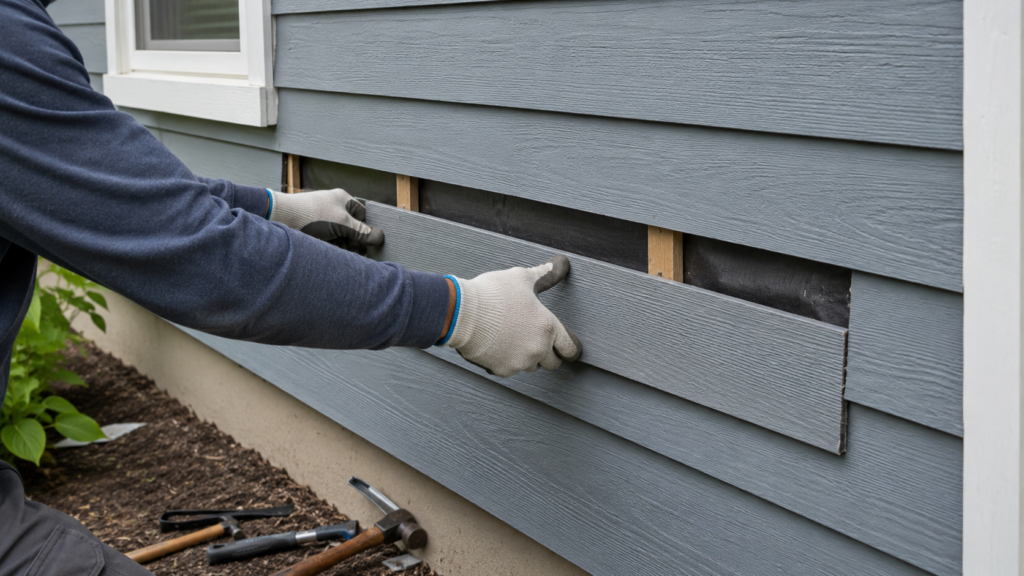
Color matching can be difficult because existing siding changes with age and sun exposure. Even the same product and color may look different when new material is installed beside older panels.
When Replacement May Make More Sense
Replacement becomes more compelling when damage is widespread, the siding is brittle or deteriorated, water has affected several areas, matching material is unavailable, or the wall assembly needs broad access for repairs.
- Multiple elevations have cracks, warping, rot, or loose sections
- Moisture problems return after targeted repairs
- The siding no longer holds coatings or fasteners reliably
- Underlying sheathing or weather-resistive materials require extensive work
- The homeowner wants a coordinated change in material, color, trim, or efficiency strategy
What May Be Behind the Siding
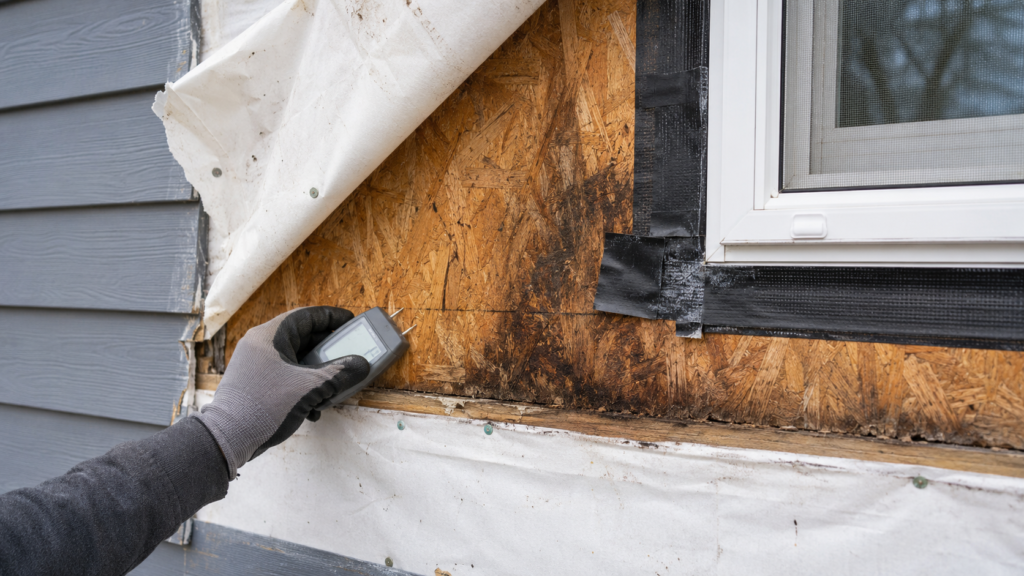
Siding is only one part of the exterior wall. Sheathing, a weather-resistive barrier, flashing, drainage paths, insulation, framing, and interior finishes contribute to performance. Removing siding may reveal water staining, deteriorated sheathing, missing flashing, insect damage, or previous repairs.
A proposal should explain how concealed damage will be documented, priced, and approved. New siding should not simply cover a wet or weakened wall assembly.
Storm Damage and Insurance
Wind or hail can crack, puncture, loosen, or remove siding. If a recent storm is suspected, document visible conditions from a safe location and arrange an inspection. Coverage depends on the policy, cause of loss, extent of damage, deductibles, exclusions, and the insurer’s determination. Age, fading, or ordinary wear alone is generally a maintenance concern rather than sudden storm damage.
Central Ohio Conditions to Consider
Central Ohio exteriors face summer heat, strong storms, winter cold, wind, moisture, and freeze-thaw cycles. Roof runoff, overflowing gutters, snow accumulation, landscaping, and shaded walls can create localized exposure. The inspection should evaluate the whole water-management path, not just the siding surface.
Questions to Ask a Siding Contractor
- Which areas can be repaired, and which require replacement?
- Will windows, doors, roof intersections, and utility penetrations receive new flashing details where needed?
- How will concealed sheathing damage be handled?
- What trim, soffit, fascia, and gutter work is included?
- What maintenance does the selected siding require?
- Which manufacturer and workmanship warranties apply?
Frequently Asked Questions
How do I know whether damage is cosmetic?
A surface mark may be cosmetic, but cracks, holes, loose fasteners, broken locks, open joints, or moisture behind the siding affect performance. An inspection can separate appearance issues from functional damage.
Can only one wall be replaced?
Sometimes. Product availability, color match, transitions, flashing, and the condition of adjacent walls determine whether a single-elevation project will look and perform correctly.
Does new siding improve energy efficiency?
Siding replacement can create an opportunity to address air sealing or add a compatible insulation strategy, but siding alone does not guarantee a specific energy result. The complete wall assembly matters.
Should siding be replaced before the roof?
Project order depends on roof-to-wall flashing, trim, gutters, and the scope of each job. When both systems need work, the contractors should coordinate the details before either project begins.
Can pressure washing damage siding?
Excessive pressure or poor technique can force water behind panels, damage finishes, or scar materials. Follow the product manufacturer’s cleaning guidance.

Schedule a Siding and Exterior Evaluation
Assured Restoration inspects siding, roofing, gutters, soffit, fascia, and storm-related exterior damage throughout Columbus and surrounding Central Ohio communities.